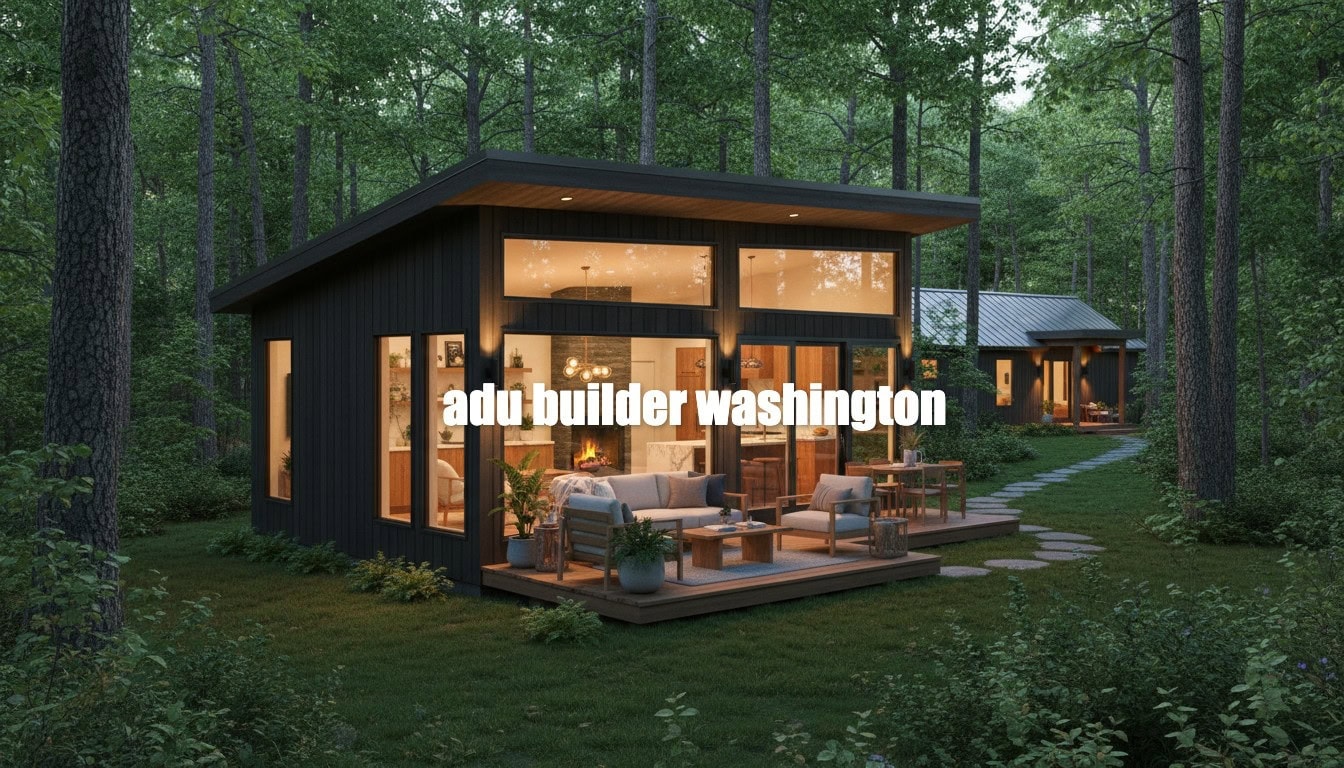
When we consider the booming ADU market in Washington state, we’re looking at a landscape where choosing the right builder can mean the difference between a dream project and a financial nightmare. With typical ADU costs ranging from $150,000 to $400,000 in Washington, we’re talking about one of the largest investments most homeowners will ever make beyond their primary residence.
We’ve seen too many Washington homeowners fall victim to inexperienced contractors who promise the world but deliver subpar results, cost overruns, and endless delays. The difference between hiring a specialized ADU builder versus a general contractor can be the difference between a 12-month project and a 24-month ordeal, between staying on budget and facing 30% cost overruns.
In our comprehensive guide, we’ll walk you through everything you need to know about selecting an ADU builder in Washington, from understanding the regulatory landscape to evaluating costs and timelines. We’ll share the red flags that signal trouble ahead and the green flags that indicate you’ve found a builder worth trusting with your investment.
For homeowners exploring alternative housing solutions, it’s worth considering that granny pods and modular homes can offer compelling alternatives to traditional ADUs. These prefabricated options often provide significant cost savings compared to assisted living facilities – with assisted living averaging $4,500-$6,000 monthly in Washington, a granny pod can pay for itself in just 3-4 years while keeping families together. Compared to traditional custom ADUs that can cost $300-500 per square foot, granny pods typically range from $200-350 per square foot, offering substantial savings without sacrificing quality or functionality.
Ready to turn your ADU vision into reality? Book A Call With Our Experts – we’ve helped hundreds of customers make their tiny home dreams a reality and can guide you through the process.
Custom vs. Prefab ADU Builders: Which Is Right for Your Project?
When we evaluate ADU options in Washington, we need to understand the fundamental differences between custom builders and prefab specialists. This decision will impact everything from our timeline to our final costs, and making the wrong choice can lead to significant regrets down the road.
Custom ADU Builders in Washington
Custom builders like Cascade Built, Seattle ADU, and Backyard Cottages offer complete design flexibility but come with longer timelines and higher costs. We typically see custom projects ranging from $250-$500 per square foot, with total project costs between $200,000-$500,000 depending on size and finishes.
The custom route makes sense when we have unique lot constraints, specific architectural requirements, or want to maximize our property’s potential. We’ve seen custom ADUs that perfectly complement existing home architecture, utilize challenging lot configurations, and incorporate high-end finishes that significantly boost property values.
Prefab ADU Specialists
Prefab specialists like Dweller, Studio Shed, and Anchor Bay Homes offer turnkey solutions typically ranging from $185,000-$350,000. These builders focus on standardized designs that can be manufactured off-site and assembled quickly, reducing our timeline from 12-18 months to 6-9 months.
We recommend prefab when we prioritize speed, cost predictability, and proven designs. The trade-off is limited customization – we’re typically choosing from a catalog of pre-designed options rather than creating something unique.
Decision Framework
To help determine which approach suits our needs, we should consider:
- Budget constraints: Prefab typically costs 20-30% less than custom
- Timeline urgency: Prefab can save 6-12 months
- Lot challenges: Custom builders handle difficult sites better
- Design preferences: Custom offers unlimited options, prefab offers proven designs
- Risk tolerance: Prefab offers more predictable outcomes
How to Choose an ADU Builder: Essential Selection Criteria
Selecting the right ADU builder requires a systematic evaluation process. We’ve developed a comprehensive framework that protects homeowners from costly mistakes while identifying builders capable of delivering exceptional results.
Licensing and Insurance Requirements
Every ADU builder we consider must hold a valid Washington State contractor’s license. We verify this through the Washington State Department of Labor & Industries website, checking for any complaints or violations. Additionally, we require proof of:
- General liability insurance ($1 million minimum)
- Workers’ compensation coverage
- Bonding appropriate to project size
- Current business license
ADU-Specific Experience
We prioritize builders who specialize in ADUs rather than general contractors who occasionally build them. Our evaluation criteria include:
- Number of completed ADUs (minimum 10 for consideration)
- Years specializing in ADU construction
- Portfolio of recent projects in Washington
- Understanding of local ADU regulations
- Relationships with ADU-friendly architects and engineers
Portfolio Review and Reference Checking
We thoroughly examine each builder’s portfolio, looking for projects similar to our vision and lot constraints. During reference checks, we ask previous clients about:
- Timeline adherence and communication quality
- Budget accuracy and change order handling
- Quality of workmanship and materials
- Problem-solving capabilities
- Post-completion support and warranty service
Red Flags to Avoid
We immediately eliminate builders who exhibit these warning signs:
- Request large upfront payments (over 10% before work begins)
- Provide vague timelines or cost estimates
- Cannot provide local ADU portfolio
- Lack proper licensing or insurance
- Have multiple unresolved complaints
- Pressure us to sign contracts immediately
The ADU Building Process in Washington: What to Expect
Understanding the complete ADU construction process helps us set realistic expectations and identify potential delays before they derail our project. We break down the process into five distinct phases, each with specific timelines and milestones.
Phase 1: Feasibility and Site Assessment (1-2 weeks)
Our builder evaluates our property for ADU viability, examining:
- Lot size and setback requirements
- Utility access and capacity
- Soil conditions and drainage
- Tree preservation requirements
- Neighborhood design standards
Phase 2: Design and Planning (4-8 weeks)
Working with architects and engineers, we develop detailed plans including:
- Architectural drawings and elevations
- Structural engineering calculations
- Electrical and plumbing plans
- Energy efficiency specifications
- Material selections and finishes
Phase 3: Permitting (2-6 months)
Washington’s streamlined ADU approval process varies by jurisdiction. Seattle typically approves ADUs in 2-3 months, while smaller cities may take 4-6 months. Our builder handles:
- Permit application submission
- Plan review responses
- Building department coordination
- Utility connection applications
Phase 4: Construction (4-8 months)
The construction phase follows a predictable sequence:
- Site preparation and excavation
- Foundation and framing
- Roofing and exterior work
- Electrical, plumbing, and HVAC rough-in
- Insulation and drywall
- Flooring, cabinets, and finish work
Phase 5: Final Inspection and Occupancy (2-4 weeks)
Before we can occupy our ADU, we must pass final inspections covering:
- Building code compliance
- Electrical and plumbing systems
- Energy efficiency requirements
- Fire safety systems
Total timeline expectations range from 10-18 months for custom ADUs and 6-12 months for prefab units, assuming no major complications.
ADU Building Costs in Washington: Complete Budget Breakdown
Understanding true ADU costs in Washington requires looking beyond basic construction expenses to include all project-related fees and potential surprises. We provide transparent cost information to help homeowners budget accurately.
Regional Cost Variations
ADU costs vary significantly across Washington:
- Seattle Metro: $250,000-$500,000 (high labor costs, complex regulations)
- Eastside (Bellevue, Redmond): $275,000-$525,000 (premium market)
- Tacoma/Olympia: $200,000-$400,000 (moderate costs)
- Spokane: $150,000-$300,000 (lower labor and material costs)
- Bellingham: $180,000-$350,000 (university town premium)
Detailed Cost Breakdown
We break down typical ADU costs by component:
- Design/Architecture (5-10%): $12,500-$40,000
- Permitting (2-5%): $5,000-$20,000
- Site Preparation (5-15%): $12,500-$60,000
- Construction (60-70%): $150,000-$350,000
- Utilities (5-10%): $12,500-$40,000
- Landscaping/Finishing (5-10%): $12,500-$40,000
Cost Per Square Foot by Type
We see consistent patterns in Washington ADU costs:
- Detached new construction: $250-$500/sq ft
- Garage conversion: $150-$300/sq ft
- Prefab installation: $200-$350/sq ft
- Basement conversion: $125-$250/sq ft
Hidden Costs Often Missed
We help homeowners budget for expenses that catch many by surprise:
- Utility connection fees ($5,000-$15,000)
- Impact fees (varies by jurisdiction)
- Soil testing and geotechnical reports ($2,000-$5,000)
- Tree removal or protection ($3,000-$15,000)
- Setback variances ($2,000-$8,000)
- Temporary housing during construction
Washington ADU Regulations and Permitting: What Builders Must Navigate
Washington’s ADU regulations create a complex landscape that experienced builders must navigate skillfully. Understanding these requirements helps us appreciate why specialized ADU builders command premium pricing.
Statewide ADU Legislation
Washington’s House Bill 1337 and subsequent legislation established baseline ADU requirements:
- Cities must allow ADUs in all single-family zones
- Maximum size limits cannot be less than 1,000 sq ft
- Setback requirements cannot exceed 5 feet
- Parking requirements are generally prohibited
- Owner-occupancy requirements are prohibited
Local Jurisdiction Variations
Despite statewide standards, local jurisdictions maintain significant control over ADU regulations:
- Seattle: Allows up to 1,000 sq ft, 4-foot setbacks, streamlined permitting
- Bellevue: Up to 1,200 sq ft, 5-foot setbacks, design review required
- Tacoma: Up to 1,000 sq ft, relaxed parking requirements
- Spokane: Up to 800 sq ft, traditional setback requirements
- Olympia: Up to 1,000 sq ft, environmental review for some areas
Permitting Process and Timelines
Washington’s streamlined ministerial approval process typically takes:
- Seattle: 60-90 days for standard ADUs
- King County: 90-120 days
- Snohomish County: 120-150 days
- Pierce County: 90-120 days
Experienced ADU builders maintain relationships with local building departments and understand each jurisdiction’s specific requirements, often reducing approval times by 30-50% compared to general contractors.
ADU Return on Investment: Financial Benefits and Property Value Impact
Understanding the financial benefits of ADUs helps justify the significant investment required. We analyze both immediate returns through rental income and long-term benefits through property value appreciation.
Property Value Increase
Washington ADUs typically boost overall property values by 20-35%, with variations by region:
- Seattle Metro: 25-35% increase ($150,000-$300,000 value add)
- Eastside: 30-40% increase ($200,000-$400,000 value add)
- Tacoma/Olympia: 20-30% increase ($100,000-$200,000 value add)
- Spokane: 15-25% increase ($75,000-$150,000 value add)
Rental Income Potential
Monthly rental rates vary significantly across Washington:
- Seattle: $1,800-$3,500/month depending on size and location
- Bellevue/Redmond: $2,000-$3,800/month
- Tacoma: $1,200-$2,500/month
- Spokane: $800-$1,800/month
- Bellingham: $1,000-$2,200/month
ROI Timeline Analysis
We calculate return on investment based on rental income:
- Seattle example: $300,000 ADU generating $2,500/month = 10% annual return, 10-year payback
- Spokane example: $200,000 ADU generating $1,200/month = 7.2% annual return, 14-year payback
Common ADU Building Mistakes and How to Avoid Them
Learning from others’ mistakes can save us significant time, money, and frustration. We’ve identified the most common ADU building errors and developed strategies to avoid them.
Choosing the Wrong Builder Type
Many homeowners hire general contractors instead of ADU specialists, leading to:
- Longer timelines due to learning curves
- Permitting delays from unfamiliarity with ADU regulations
- Cost overruns from unexpected complications
- Quality issues from inexperience with small-space design
Prevention: We always verify that builders have completed at least 10 ADUs and can provide references from recent projects.
Underestimating Total Costs
We see homeowners consistently underbudget by 20-30%, failing to account for:
- Permit fees and impact charges
- Utility connection costs
- Site preparation challenges
- Change orders during construction
- Landscaping and exterior improvements
Prevention: We recommend budgeting 15-20% above initial estimates for contingencies.
Ignoring Local Regulations
Regulatory oversights can derail projects:
- Setback violations requiring design changes
- Tree preservation requirements adding costs
- Historic district restrictions limiting design options
- Utility capacity limitations requiring upgrades
Prevention: We conduct thorough site assessments and regulatory reviews before finalizing designs.
Financing Your Washington ADU: Comprehensive Funding Guide
Securing appropriate financing for our ADU project requires understanding various options and choosing the approach that best fits our financial situation and project timeline.
Home Equity Loans and HELOCs
Home equity financing remains the most popular ADU funding method:
- Home Equity Loans: Fixed rates (currently 7-9%), predictable payments, lump sum disbursement
- HELOCs: Variable rates (currently 6-8%), flexible access, interest-only payment options
- Pros: Lower rates than personal loans, tax-deductible interest
- Cons: Home serves as collateral, qualification based on equity and income
Cash-Out Refinancing
Refinancing makes sense when we can secure rates lower than our current mortgage:
- Current rates: 6.5-7.5% for primary residences
- Best for: Homeowners with higher existing mortgage rates
- Considerations: Closing costs, extended loan terms, cash-out limits
Construction Loans
Short-term construction financing converts to permanent loans:
- Typical terms: 12-18 months construction period, then convert to permanent financing
- Rates: Usually 1-2% above prime rate during construction
- Requirements: Detailed construction plans, qualified builder, 20-25% down payment
Specialized ADU Financing Programs
Several lenders offer ADU-specific financing:
- RenoFi: Renovation loans based on after-renovation value
- Figure: Home equity lines specifically for home improvements
- Local credit unions: Often offer competitive rates for members
- Washington State Housing Finance Commission: Occasional ADU grant programs
Frequently Asked Questions About ADU Builders in Washington
We address the most common questions Washington homeowners have about ADU builders and the construction process.
How long does it take to build an ADU in Washington?
Quick Answer: 6-18 months depending on type and complexity.
Detailed Answer: Timeline varies significantly by project type. Prefab ADUs typically take 6-9 months from contract to occupancy, while custom builds require 12-18 months. Factors affecting timeline include permitting complexity, site conditions, weather delays, and material availability.
How much does an ADU cost in Washington?
Quick Answer: $150,000-$500,000+ depending on region, size, and finishes.
Detailed Answer: Costs vary dramatically across Washington. Seattle metro projects typically range $250,000-$500,000, while Spokane projects may cost $150,000-$300,000. Size significantly impacts cost – a 400 sq ft studio might cost $150,000, while a 1,200 sq ft two-bedroom could exceed $400,000.
Do I need an ADU specialist or can a general contractor build it?
Quick Answer: ADU specialists are strongly recommended for efficiency and expertise.
Detailed Answer: While licensed general contractors can legally build ADUs, specialists offer significant advantages. ADU specialists understand local regulations, maintain relationships with ADU-friendly architects and engineers, and have streamlined processes that reduce timelines by 20-40%.
What’s the difference between custom and prefab ADU builders?
Quick Answer: Custom offers unlimited design flexibility; prefab offers speed and cost predictability.
Detailed Answer: Custom builders create unique designs tailored to our specific needs and site constraints, but require longer timelines (12-18 months) and higher costs ($250-500/sq ft). Prefab builders offer pre-designed units that can be manufactured off-site and assembled quickly (6-9 months), with more predictable costs ($200-350/sq ft) but limited customization options.
How do I verify an ADU builder’s credentials?
Quick Answer: Check licensing, insurance, references, and portfolio through official channels.
Detailed Answer: Verify contractor licensing through Washington State Department of Labor & Industries website. Request proof of current general liability insurance and workers’ compensation coverage. Check Better Business Bureau ratings and online reviews. Most importantly, contact recent clients to discuss their experience with timeline adherence, budget accuracy, and quality of work.
Conclusion: Taking the Next Steps with Your Washington ADU Project
As we conclude our comprehensive guide to ADU builders in Washington, we want to emphasize the key takeaways that will guide your success. Choosing a specialized ADU builder rather than a general contractor can save you months of time and thousands of dollars while ensuring a higher-quality result. Understanding the true costs – including hidden expenses like utility connections and permitting fees – helps you budget accurately and avoid unpleasant surprises.
Washington’s ADU-friendly regulatory environment creates excellent opportunities for homeowners willing to invest in quality construction. With property value increases of 20-35% and rental income potential of $1,200-$3,500 monthly depending on location, ADUs offer compelling financial returns for those who plan carefully and execute professionally.
Your 30-Day ADU Action Plan
Week 1: Research local regulations, assess your property’s feasibility, and begin identifying potential builders in your area.
Week 2: Request quotes from 3-5 qualified builders, verify their credentials, and review their portfolios.
Week 3: Contact references, visit recent projects if possible, and begin exploring financing options.
Week 4: Compare proposals, negotiate terms, and select your builder based on expertise, communication, and value rather than lowest price alone.
Final Checklist Before Signing
Before committing to any builder, ensure you have:
- Verified licensing and insurance through official channels
- Reviewed detailed portfolio of recent ADU projects
- Contacted at least three recent clients
- Received detailed written estimates with clear scope of work
- Understood timeline expectations and potential delay factors
- Secured appropriate financing with favorable terms
- Reviewed contract terms including warranty coverage
The transformative potential of ADUs extends beyond financial returns. We’ve seen families stay together through multi-generational living arrangements, young adults achieve housing independence, and communities address housing shortages one backyard at a time. Your ADU project represents not just a construction project, but an investment in your family’s future and your community’s housing solutions.
Take the first step today by contacting qualified builders in your area for free consultations. The sooner you begin this process, the sooner you’ll be enjoying the benefits of your new ADU. Washington’s strong ADU market and supportive regulations create an ideal environment for success – now it’s time to turn your vision into reality.
For those considering alternative housing solutions beyond traditional ADUs, remember that tiny house builders in Washington offer additional options that might better suit your specific needs and budget. Whether you choose a traditional ADU, a tiny house, or another alternative housing solution, the key is working with experienced professionals who understand your local market and regulations.