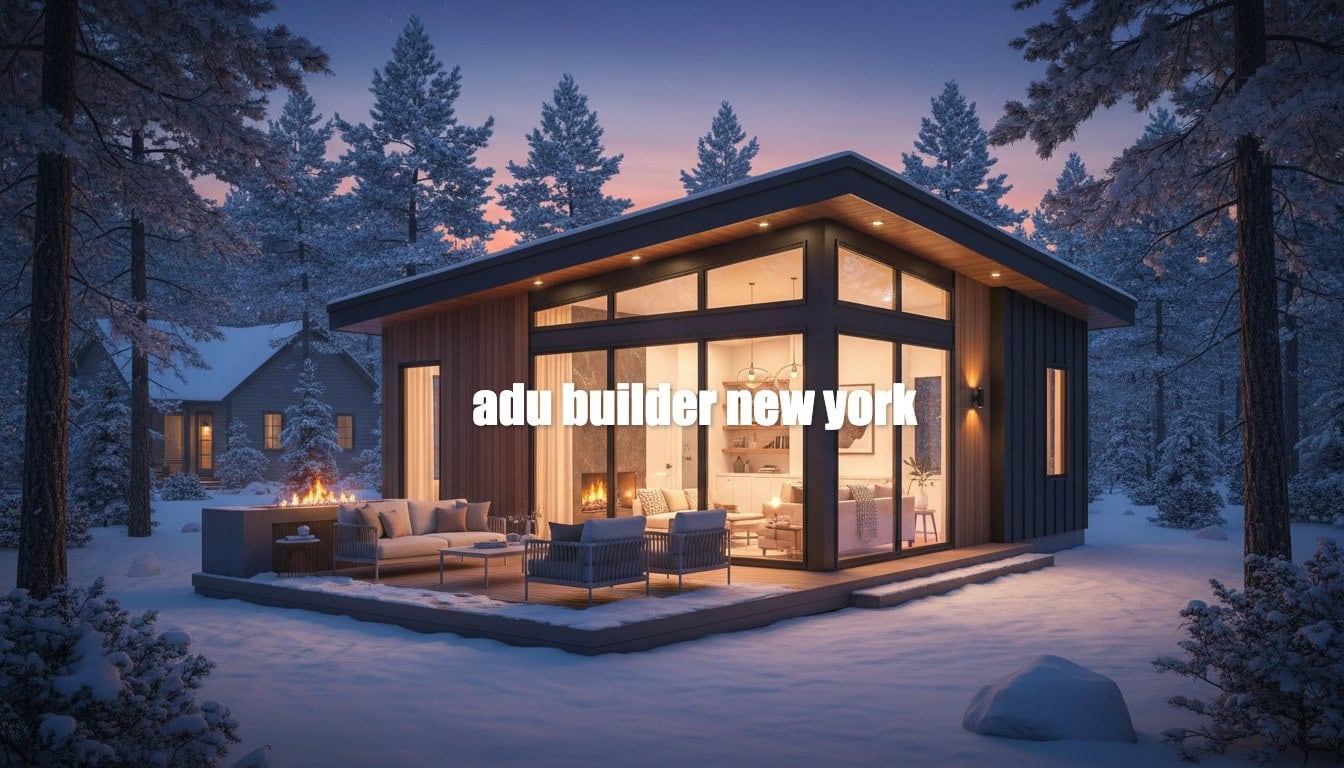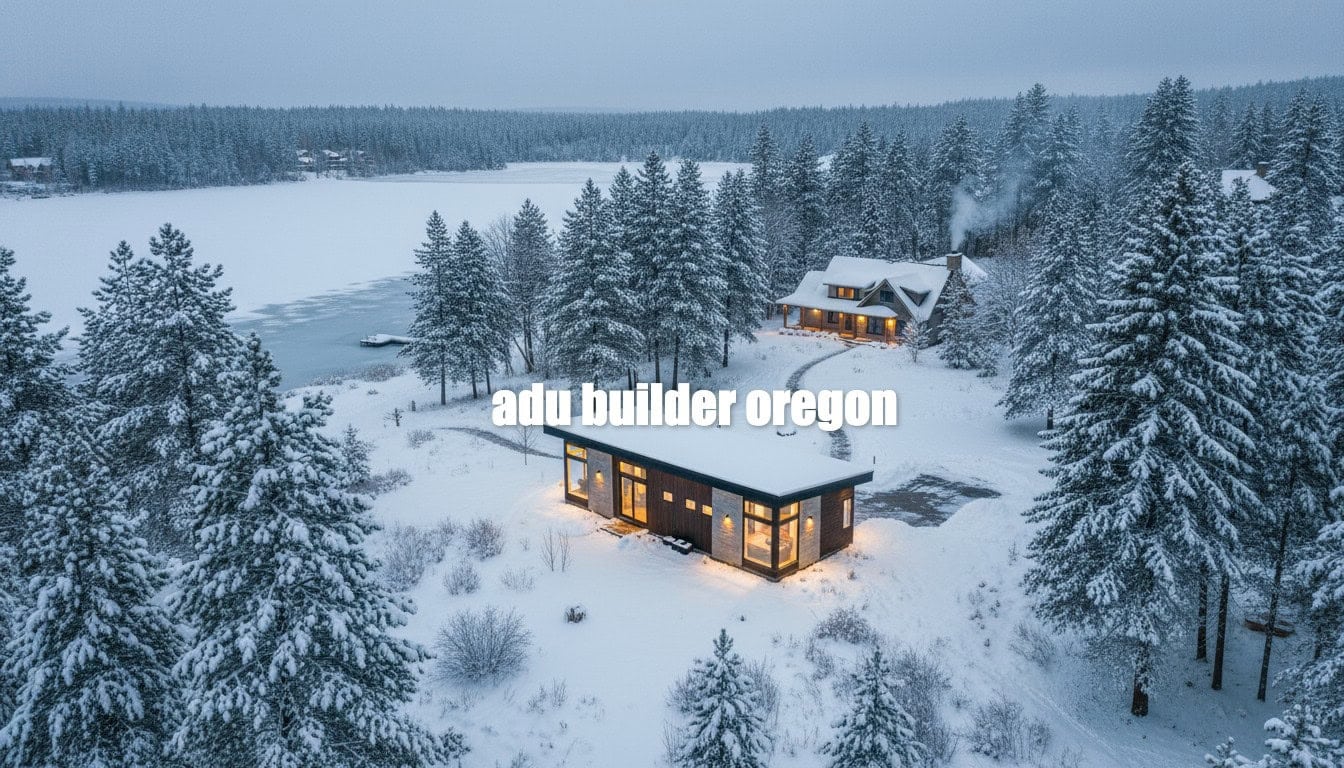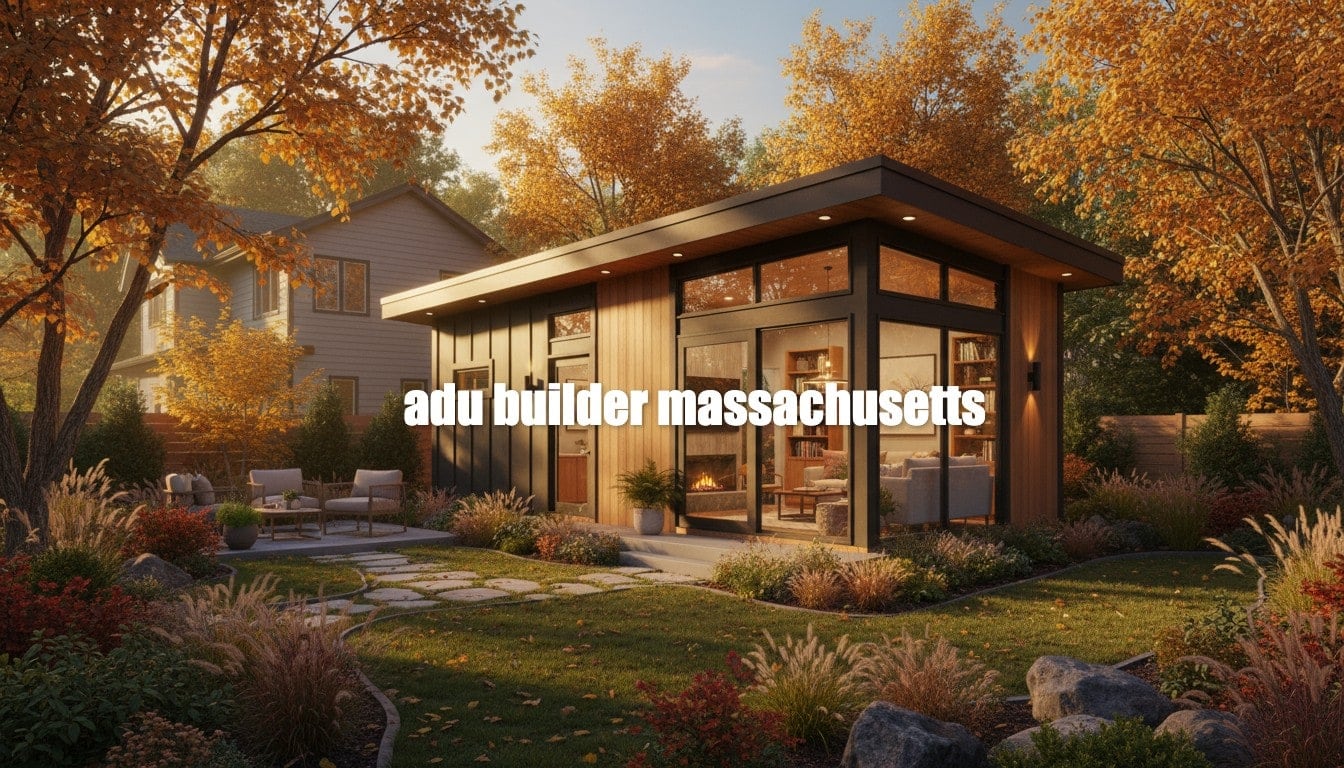
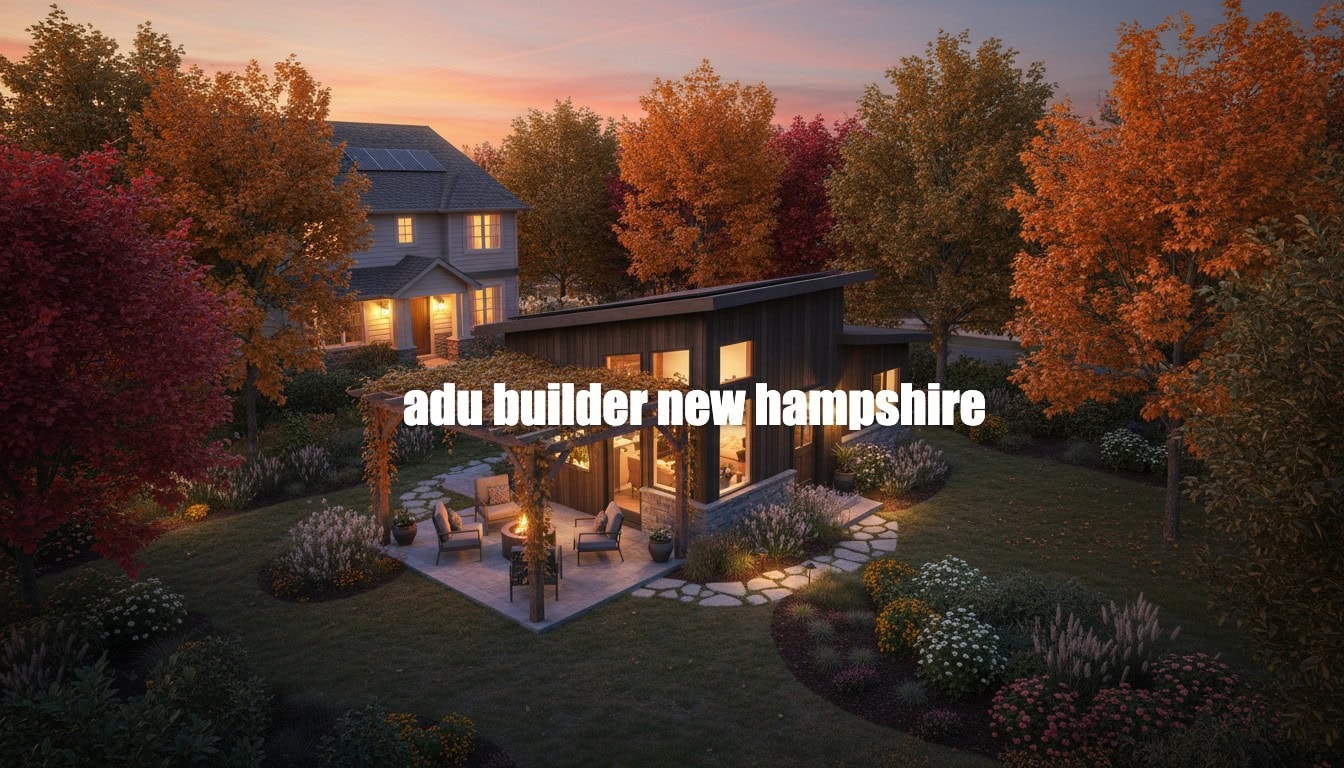
When we consider the growing housing crisis and the need for affordable living solutions, Accessory Dwelling Units (ADUs) have emerged as a game-changing opportunity for New Hampshire homeowners. With typical ADU projects ranging from $150,000 to $400,000, choosing the right builder isn’t just about construction quality—it’s about protecting a significant investment that could transform our property value and provide decades of rental income or multigenerational living solutions.
We’ve witnessed too many New Hampshire homeowners fall victim to inexperienced contractors who promise ADU expertise but deliver costly delays, permit rejections, and substandard construction. The difference between hiring a specialized ADU builder versus a general contractor can mean the difference between a smooth 8-month project and an 18-month nightmare filled with cost overruns and regulatory headaches.
While exploring ADU options, many New Hampshire families are also discovering the cost-effective alternative of granny pods and tiny homes. These compact living solutions often provide similar functionality at a fraction of traditional ADU costs—sometimes 40-60% less expensive than conventional construction. Great Lakes Tiny Homes specializes in helping families explore these alternatives, offering park model homes and granny pods that can serve as temporary housing during ADU construction or as permanent cost-effective solutions. Unlike assisted living facilities that can cost $4,000-$6,000 monthly, a well-designed granny pod provides independent living for aging family members at a one-time investment, often paying for itself within 2-3 years compared to ongoing care facility expenses.
Ready to explore your options? Book a call with our experts who have helped hundreds of customers make their tiny home dreams a reality.
Custom vs. Prefab ADU Builders: Which Is Right for Your Project?
When we’re planning our ADU project in New Hampshire, one of our first critical decisions involves choosing between custom-built and prefab approaches. This choice fundamentally shapes our timeline, budget, and final outcome.
Custom ADU Builders: Maximum Flexibility at Premium Cost
Custom ADU builders in New Hampshire typically charge between $250-$500 per square foot, depending on our location and finish level. These builders excel at creating unique solutions that work around our property’s specific challenges—whether that’s steep slopes, existing trees we want to preserve, or unusual lot configurations that require creative design approaches.
We’ll find custom builders particularly valuable when our lot has constraints that prefab units can’t accommodate. For instance, if we’re dealing with New Hampshire’s rocky soil conditions or need to work around existing septic systems, custom builders can engineer solutions that prefab companies simply can’t offer. The timeline for custom builds typically runs 12-18 months from initial design to occupancy.
Prefab ADU Specialists: Speed and Predictability
Prefab ADU companies offer turnkey solutions typically ranging from $185,000 to $350,000, depending on size and finish packages. These builders have streamlined their processes to deliver faster timelines—usually 6-9 months total—and more predictable costs since they’re working with proven designs and established supply chains.
The limitation with prefab approaches becomes apparent when our site has unique challenges. Most prefab companies require relatively flat lots with standard utility access and minimal site preparation. If our New Hampshire property has significant slopes, ledge, or requires extensive site work, prefab options may not be feasible or cost-effective.
For those considering alternatives to traditional ADUs, tiny house builders in New Hampshire offer another compelling option, often delivering similar functionality at 30-50% lower costs than conventional ADU construction.
How to Choose an ADU Builder: Essential Selection Criteria
Selecting the right ADU builder protects us from the costly mistakes that plague many New Hampshire homeowners. We’ve developed a systematic approach to evaluating builders that goes far beyond comparing quotes and looking at pretty portfolios.
Licensing and Insurance Requirements
Every ADU builder we consider must hold a valid New Hampshire contractor’s license. We can verify this through the New Hampshire Department of Labor’s online database. Beyond basic licensing, we need to confirm they carry adequate insurance: general liability coverage of at least $1 million, workers’ compensation insurance, and builder’s risk insurance for our project.
We also verify bonding, which protects us if our builder fails to complete the project or doesn’t pay subcontractors. Many homeowners skip this step, but bonding provides crucial financial protection for projects of this magnitude.
ADU-Specific Experience Evaluation
General contractors often claim they can build ADUs, but we need builders with specific ADU experience. We ask for portfolios showing at least 10 completed ADU projects, preferably in New Hampshire where they understand local regulations and building conditions.
During our evaluation, we request references from recent ADU clients and actually contact them. We ask about timeline adherence, communication quality, problem-solving abilities, and whether they’d hire the builder again. Red flags include builders who can’t provide recent references or seem evasive about their ADU experience.
Permitting Expertise and Track Record
New Hampshire’s zoning laws vary significantly between municipalities, and experienced ADU builders understand these nuances. We evaluate builders based on their familiarity with our specific town’s requirements and their track record of successful permit approvals.
We ask potential builders about their typical permitting timeline in our area and request examples of recent permits they’ve obtained. Builders who regularly work in our region should have established relationships with local building departments and understand common approval challenges.
The ADU Building Process in New Hampshire: What to Expect
Understanding the complete ADU building process helps us set realistic expectations and identify potential problems before they become costly delays. We’ve broken down the process into five distinct phases, each with specific timelines and homeowner responsibilities.
Phase 1: Feasibility and Site Assessment (1-2 weeks)
Our ADU journey begins with a comprehensive site evaluation where builders assess our property’s suitability for ADU construction. This includes surveying existing utilities, evaluating soil conditions, checking setback requirements, and identifying potential challenges like ledge, wetlands, or steep slopes common in New Hampshire.
Phase 2: Design and Planning (4-8 weeks)
The design phase involves creating architectural plans that meet both our needs and New Hampshire’s building codes. Our builder will work with architects and engineers to develop plans that address site-specific challenges while maximizing our ADU’s functionality and value.
Phase 3: Permitting (2-6 months)
New Hampshire’s permitting timelines vary significantly between municipalities. Rural towns might approve permits in 4-6 weeks, while larger cities like Manchester or Nashua often require 3-4 months. Our builder should handle permit submission and coordinate with local officials throughout the review process.
Phase 4: Construction (4-8 months)
Construction begins with site preparation, including excavation, utility connections, and foundation work. New Hampshire’s rocky soil and frost line requirements (4 feet deep) can extend foundation work, especially if ledge removal is necessary.
The construction sequence typically follows: foundation and utilities (2-4 weeks), framing and roofing (3-4 weeks), mechanical and electrical rough-in (2-3 weeks), insulation and drywall (3-4 weeks), and finish work including flooring, cabinets, and fixtures (4-6 weeks). Weather delays are common during New Hampshire winters, potentially extending timelines by 2-4 weeks.
Phase 5: Final Inspection and Occupancy (2-4 weeks)
The final phase involves multiple inspections: electrical, plumbing, mechanical, and final building inspection. Our builder coordinates these inspections and addresses any required corrections. Once we receive our certificate of occupancy, our ADU is ready for use.
ADU Building Costs in New Hampshire: Complete Budget Breakdown
Understanding the true cost of ADU construction in New Hampshire requires looking beyond basic construction costs to include all project-related expenses. We’ve analyzed dozens of New Hampshire ADU projects to provide realistic budget expectations that help us avoid costly surprises.
Regional Cost Variations Across New Hampshire
ADU costs vary significantly across New Hampshire based on local labor costs, material availability, and permitting complexity. In the Seacoast region around Portsmouth and Dover, we typically see costs ranging from $200,000-$350,000 for detached ADUs. The Manchester-Nashua corridor shows similar pricing due to higher labor costs and increased demand.
Rural areas of New Hampshire often offer lower construction costs—$150,000-$280,000 for comparable projects—but may face higher material delivery costs and limited contractor availability. Northern New Hampshire can see additional costs for extended construction seasons and challenging site access during winter months.
Detailed Cost Breakdown by Component
Design and architecture typically represent 5-10% of our total project cost, ranging from $8,000-$25,000 depending on complexity. This includes architectural plans, engineering, and any required surveys or soil testing.
Permitting costs in New Hampshire range from $2,000-$8,000 (2-5% of total cost), varying significantly between municipalities. Some towns charge flat fees around $2,000, while others calculate fees based on construction value, potentially reaching $8,000+ for larger ADUs.
Site preparation represents 5-15% of costs but can vary dramatically based on our property conditions. Simple sites might require only $8,000-$15,000 for basic excavation and utility connections. Complex sites with ledge removal, extensive grading, or challenging utility access can cost $25,000-$50,000 or more.
Construction costs form the largest component at 60-70% of our total budget. This includes foundation, framing, roofing, mechanical systems, and basic finishes. For a 600-square-foot ADU, we typically budget $90,000-$180,000 for construction, depending on finish quality and complexity.
Hidden Costs Often Missed in Initial Budgets
Many New Hampshire homeowners underestimate several significant cost categories. Soil testing and environmental assessments can cost $2,000-$5,000, especially if our property has potential contamination concerns or requires wetlands delineation.
Tree removal and landscaping often add $5,000-$15,000 to our project, particularly on wooded New Hampshire lots where mature trees require professional removal. We should budget for both removal costs and landscape restoration around our completed ADU.
Winter construction delays can increase costs through extended rental of equipment, temporary heating, and weather protection measures. We recommend adding 10-15% contingency to our budget for weather-related delays and unforeseen site conditions common in New Hampshire.
For families seeking more affordable options, tiny houses for sale in New Hampshire often provide similar functionality at 40-60% lower costs than traditional ADU construction.
New Hampshire ADU Regulations and Permitting: What Builders Must Navigate
New Hampshire’s approach to ADU regulation differs significantly from states like California, with most authority delegated to local municipalities. This creates a complex patchwork of regulations that experienced builders must navigate to ensure our projects comply with all applicable requirements.
Statewide ADU Framework
New Hampshire doesn’t have comprehensive statewide ADU legislation like many other states. Instead, the state building code provides basic construction standards while leaving zoning and land use decisions to individual municipalities. This means our ADU’s feasibility depends heavily on our specific town’s zoning ordinances.
Municipal Variations Across New Hampshire
Each New Hampshire municipality sets its own ADU policies, creating significant variation in what’s allowed and how projects are approved. Portsmouth and Dover have relatively ADU-friendly policies, allowing detached ADUs up to 800-1,000 square feet with streamlined approval processes.
Manchester requires special exceptions for most ADUs, adding 2-4 months to our permitting timeline and requiring public hearings. Nashua allows ADUs by right in some zones but prohibits them entirely in others, making location crucial to our project’s feasibility.
Common Permitting Challenges and Solutions
Setback requirements create the most common permitting challenges in New Hampshire. Many towns require 10-20 foot setbacks from property lines, which can make ADUs impossible on smaller lots. Experienced builders help us identify potential variance needs early in the design process.
Septic system capacity often limits ADU feasibility, particularly on older properties with undersized systems. Our builder should coordinate septic evaluations early in the process and budget for potential system upgrades that can cost $15,000-$30,000.
ADU Return on Investment: Financial Benefits and Property Value Impact
Understanding the financial returns from our ADU investment helps justify the significant upfront costs and guides our decision-making throughout the project. We’ve analyzed New Hampshire market data to provide realistic expectations for both rental income and property value impacts.
Property Value Increase Analysis
Well-designed ADUs typically increase our property value by 20-35% of the ADU’s construction cost. For a $200,000 ADU, we might see property value increases of $40,000-$70,000, though this varies significantly based on our location and local market conditions.
Properties in desirable New Hampshire locations like Portsmouth, Hanover, or North Conway often see higher value increases due to strong rental markets and housing demand. Rural properties may see more modest value increases but often have lower construction costs that improve overall returns.
Rental Income Potential Across New Hampshire
Rental income varies dramatically across New Hampshire based on location, ADU size, and local market conditions. In the Seacoast region, well-appointed 600-800 square foot ADUs typically rent for $1,200-$1,800 monthly, while similar units in rural areas might rent for $800-$1,200.
College towns like Durham (UNH) and Hanover (Dartmouth) offer strong rental markets with potential for higher rents, particularly for furnished units targeting graduate students or visiting faculty. These markets often support rents of $1,400-$2,200 monthly for quality ADUs.
Alternative Uses Beyond Rental Income
Many New Hampshire families build ADUs for multigenerational living rather than rental income. Housing aging parents in an ADU can save $4,000-$6,000 monthly compared to assisted living facilities, creating substantial long-term savings that often exceed rental income potential.
Common ADU Building Mistakes and How to Avoid Them
Learning from others’ mistakes helps us avoid the costly errors that plague many New Hampshire ADU projects. We’ve identified the most common pitfalls and developed strategies to prevent them from derailing our projects.
Choosing the Wrong Builder Type
Many homeowners hire general contractors who lack ADU-specific experience, leading to permitting delays, cost overruns, and design problems. General contractors often underestimate the complexity of ADU regulations and may not understand the unique challenges of small-space design.
We avoid this mistake by specifically seeking builders with demonstrated ADU experience in New Hampshire. We ask for portfolios of completed ADU projects, references from recent clients, and evidence of familiarity with local ADU regulations.
Underestimating Total Project Costs
Initial cost estimates rarely include all project expenses, leading to budget shortfalls that force compromises or project delays. We commonly see homeowners underestimate site preparation costs, utility connections, and permitting expenses by 20-40%.
We protect ourselves by requesting detailed, itemized estimates that include all anticipated costs and adding 15-20% contingency for unforeseen expenses. New Hampshire’s challenging site conditions—rocky soil, steep slopes, and harsh weather—often create unexpected costs that conservative budgeting helps absorb.
Ignoring Local Regulations and Setback Requirements
New Hampshire’s municipal regulations vary dramatically, and many homeowners begin design work without fully understanding their local requirements. This leads to costly redesigns, permit delays, or project cancellations when designs don’t comply with local zoning.
We prevent this mistake by researching our municipality’s ADU policies before beginning design work. We contact our local planning department, review zoning ordinances, and consider hiring builders who regularly work in our area and understand local requirements.
Financing Your New Hampshire ADU: Comprehensive Funding Guide
Securing appropriate financing for our ADU project requires understanding the various options available and choosing the approach that best fits our financial situation and project timeline.
Home Equity Loans and HELOCs
Home equity loans provide fixed-rate financing that works well for ADU projects with known costs and timelines. Current rates in New Hampshire range from 7.5-9.5% for qualified borrowers, with terms typically extending 10-20 years. We can typically borrow up to 80-85% of our home’s value minus existing mortgage balances.
Home Equity Lines of Credit (HELOCs) offer more flexibility for projects with variable costs or extended timelines. We draw funds as needed during construction, paying interest only on amounts used. Current HELOC rates range from 8.0-10.5%, with most offering 10-year draw periods followed by 20-year repayment terms.
Construction Loans for ADU Projects
Construction loans provide financing specifically designed for building projects, with funds disbursed as construction progresses. These loans typically convert to permanent financing upon completion, streamlining the process for our ADU project.
New Hampshire banks and credit unions offer construction-to-permanent loans with rates typically 1-2% above conventional mortgage rates during construction, then converting to standard mortgage rates upon completion. We typically need 20-25% down payment and strong credit scores (720+) for approval.
Specialized ADU Financing Programs
Some lenders now offer ADU-specific financing products that consider projected rental income in qualification calculations. These programs recognize that ADUs generate income that helps support loan payments, potentially allowing us to qualify for larger loan amounts.
Local credit unions in New Hampshire sometimes offer favorable terms for ADU projects, particularly for members with strong banking relationships. We should explore options with institutions like Service Credit Union, St. Mary’s Bank, or local community banks that understand our regional market.
Frequently Asked Questions About ADU Builders in New Hampshire
How long does it take to build an ADU in New Hampshire?
Quick Answer: 8-18 months depending on type and complexity.
Detailed Answer: ADU construction timelines in New Hampshire vary significantly based on project type, site conditions, and municipal permitting processes. Prefab ADUs typically take 6-9 months from contract to occupancy, while custom builds require 12-18 months. The permitting phase alone can take 2-6 months depending on our municipality—rural towns often approve permits faster than larger cities like Manchester or Nashua.
How much does an ADU cost in New Hampshire?
Quick Answer: $150,000-$400,000+ depending on size, location, and finishes.
Detailed Answer: ADU costs in New Hampshire range from $150,000 for basic garage conversions to $400,000+ for high-end custom detached units. Typical costs break down to $200-$400 per square foot for new construction, with regional variations—Seacoast and Manchester areas typically cost 15-25% more than rural regions. Hidden costs often add $20,000-$40,000 to initial estimates, including site preparation, utility connections, permitting fees, and landscaping.
Do I need an ADU specialist or can a general contractor build it?
Quick Answer: ADU specialists are strongly recommended for efficiency and expertise.
Detailed Answer: While licensed general contractors can legally build ADUs, specialists offer significant advantages in permitting knowledge, design efficiency, and timeline management. ADU specialists understand New Hampshire’s varied municipal regulations and have established relationships with local building departments that often result in faster permit approvals.
What’s the difference between custom and prefab ADU builders?
Quick Answer: Custom offers flexibility but takes longer; prefab provides speed and predictable costs.
Detailed Answer: Custom ADU builders create unique designs tailored to our specific site and needs, typically costing $250-$500 per square foot with 12-18 month timelines. They excel at challenging sites with slopes, ledge, or unusual configurations common in New Hampshire. Prefab builders offer standardized designs with faster delivery (6-9 months) and more predictable costs ($185,000-$350,000 turnkey), but require relatively flat sites with standard utility access.
How do I verify an ADU builder’s credentials?
Quick Answer: Check licensing, insurance, references, and ADU-specific portfolio.
Detailed Answer: We verify builder credentials through multiple steps: confirm active New Hampshire contractor’s license through the Department of Labor database, verify current general liability and workers’ compensation insurance, request and contact references from recent ADU projects, and review portfolios showing completed ADUs. We also check Better Business Bureau ratings, online reviews, and any complaints filed with state licensing boards.
Conclusion: Taking the Next Steps with Your New Hampshire ADU Project
As we conclude our comprehensive guide to ADU builders in New Hampshire, we want to emphasize the key takeaways that will guide our success. Choosing specialized ADU builders over general contractors consistently leads to better outcomes—faster permitting, fewer surprises, and higher-quality results that maximize our investment returns. Understanding our true project costs, including the hidden expenses that catch many homeowners off-guard, protects us from budget shortfalls that can derail our projects.
New Hampshire’s municipal regulations require careful navigation, making local expertise invaluable for our project’s success. The builders who regularly work in our area understand these nuances and have established relationships that smooth the approval process. Whether we choose custom or prefab approaches, the key is matching our builder’s expertise to our project’s specific requirements and site conditions.
Your 30-Day ADU Action Plan
Week 1: Research our municipality’s ADU regulations, verify zoning compliance, and identify any potential restrictions that might affect our project. Contact our local planning department to understand specific requirements and typical approval timelines.
Week 2: Conduct initial site assessment to identify potential challenges like setback issues, utility access, or soil conditions. Consider hiring a surveyor if property boundaries or setbacks are unclear.
Week 3: Research and contact 5-7 potential builders, requesting portfolios, references, and preliminary cost estimates. Verify licensing and insurance for each candidate.
Week 4: Interview top 3-4 builders, check references, and request detailed proposals. Begin exploring financing options and get pre-approved for our preferred funding approach.
Final Checklist Before Signing with a Builder
Before we commit to any builder, we should have: verified current New Hampshire contractor’s license and insurance coverage, contacted at least three recent ADU clients as references, reviewed a portfolio of completed ADU projects in New Hampshire, received detailed written proposals with itemized costs and timelines, confirmed the builder’s familiarity with our municipality’s requirements, and secured financing pre-approval for our project budget.
We should also have realistic expectations for our timeline (8-18 months), budget (including 15-20% contingency), and our role in the process (weekly communication and decision-making). Quality builders welcome thorough evaluation because they understand that informed clients make better partners throughout the construction process.
ADUs represent more than just additional square footage—they’re solutions to New Hampshire’s housing challenges, opportunities for multigenerational living, and investments in our communities’ future. Whether we’re creating rental income, housing aging parents, or adding flexible space for our changing needs, well-planned ADUs enhance both our properties and our lives.
We encourage you to take the first step by contacting qualified builders in your area for initial consultations. Most offer free site evaluations that help determine your project’s feasibility and provide realistic cost estimates. With proper planning, the right builder, and realistic expectations, your New Hampshire ADU project can provide decades of value and satisfaction.
For those exploring alternatives to traditional ADU construction, consider the cost-effective options available through counties in New Hampshire that allow tiny houses, which often provide similar functionality at significantly lower costs and faster timelines.