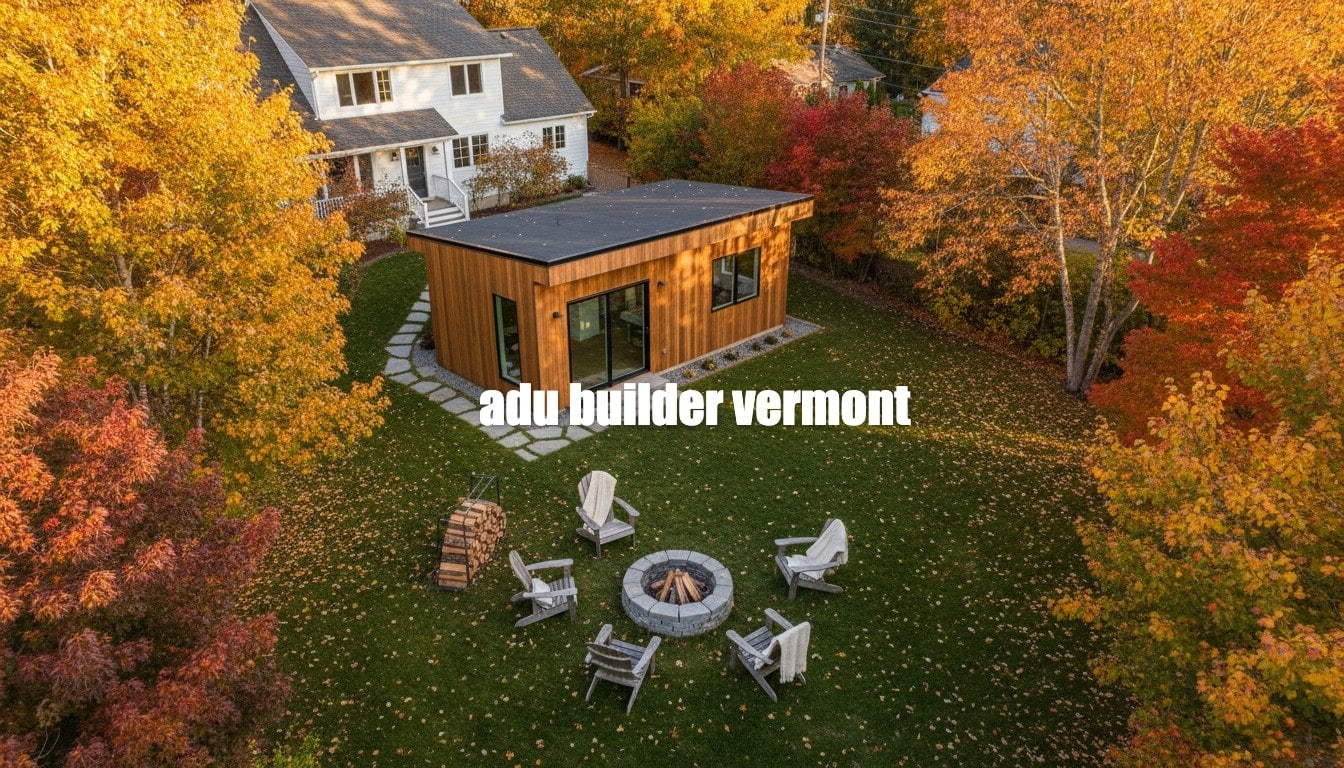
When we’re considering adding an Accessory Dwelling Unit (ADU) to our Vermont property, the stakes couldn’t be higher. With typical ADU projects ranging from $150,000 to $400,000 or more, choosing the wrong builder can turn our dream of additional income or family housing into a financial nightmare. We’ve seen too many Vermont homeowners fall victim to inexperienced contractors who promise the world but deliver subpar results, cost overruns, and endless delays.
Vermont’s unique climate challenges, zoning regulations, and building codes require builders with specialized knowledge that goes far beyond general construction experience. The difference between hiring a seasoned ADU specialist and a general contractor can mean the difference between a smooth 8-month build and an 18-month ordeal filled with permit delays, weather-related setbacks, and costly mistakes.
In our comprehensive guide, we’ll walk you through everything you need to know about selecting and working with ADU builders in Vermont. We’ll reveal the critical questions that separate true ADU experts from contractors who are simply looking for their next paycheck, share real cost breakdowns from Vermont ADU projects, and provide you with a systematic approach to evaluating builders that will protect your investment.
For families considering smaller, more cost-effective alternatives to traditional ADUs, we’ve found that granny pods and tiny homes can offer compelling solutions. These prefabricated options often cost 40-60% less than traditional ADUs while providing comfortable living spaces for elderly family members. When we compare the $3,000-$5,000 monthly cost of assisted living facilities to a one-time investment of $80,000-$150,000 for a quality granny pod, the financial benefits become clear. At Great Lakes Tiny Homes, we’ve helped hundreds of families across the country explore these alternatives, offering consultation services to help determine whether a traditional ADU, granny pod, or tiny home best fits their specific needs and budget.
Ready to explore your options? Book a call with our experts who have helped hundreds of customers make their tiny home dreams a reality.
Custom vs. Prefab ADU Builders: Which Is Right for Your Project?
When we’re planning our Vermont ADU project, one of our first critical decisions involves choosing between custom-built and prefabricated options. This choice will significantly impact our timeline, budget, and final result.
Custom ADU Builders in Vermont
Custom builders like specialized tiny house builders in Vermont offer complete design flexibility but require longer timelines and higher budgets. We typically see custom ADU costs ranging from $250-$500 per square foot in Vermont, with total project costs between $200,000-$450,000.
The custom route allows us to:
- Design around our specific lot constraints and setback requirements
- Match our existing home’s architectural style perfectly
- Incorporate specialized features like wheelchair accessibility
- Choose every finish, fixture, and material to our exact preferences
- Optimize for Vermont’s climate with specialized insulation and heating systems
However, custom builds typically take 12-18 months from design to completion, and we need to budget for potential cost overruns of 10-20%.
Prefab ADU Specialists
Prefabricated ADU companies offer turnkey solutions with faster timelines and more predictable costs. In Vermont, we can expect prefab ADUs to cost between $185,000-$350,000 for complete installation, with timelines of 6-9 months.
Prefab advantages include:
- Factory-controlled construction quality with consistent results
- Faster installation with minimal weather delays
- Fixed pricing with fewer surprise costs
- Proven designs that meet Vermont building codes
- Energy-efficient construction optimized for cold climates
For Vermont families exploring alternatives, we’ve found that tiny houses for sale in Vermont can provide similar benefits to ADUs at significantly lower costs.
How to Choose an ADU Builder: Essential Selection Criteria
Selecting the right ADU builder in Vermont requires a systematic evaluation process that goes far beyond comparing quotes. We need to protect ourselves from costly mistakes by thoroughly vetting each potential builder.
Licensing and Insurance Requirements
Every ADU builder we consider must hold a valid Vermont contractor’s license appropriate for residential construction. We can verify licenses through the Vermont Secretary of State’s Office of Professional Regulation. Additionally, we require:
- General liability insurance with minimum $1 million coverage
- Workers’ compensation insurance for all employees
- Builder’s risk insurance for our project
- Bonding appropriate for our project size
ADU-Specific Experience Evaluation
General contractors may claim they can build ADUs, but we need specialists who understand the unique challenges. We look for builders with:
- Minimum 10 completed ADU projects in Vermont
- At least 3 years specializing in ADU construction
- Experience with Vermont’s specific zoning and permitting processes
- Knowledge of energy efficiency requirements for Vermont climate
- Familiarity with utility connection processes for secondary units
Portfolio Review and Reference Checking
A comprehensive portfolio review reveals builder capabilities and quality standards. We examine:
- Before and after photos of at least 5 recent Vermont projects
- Variety of ADU types: detached, attached, garage conversions
- Quality of finishes and attention to detail
- Problem-solving examples for challenging sites
- Energy efficiency features and winter performance
We contact at least three recent clients to discuss their experience, focusing on communication, timeline adherence, budget management, and post-construction support.
Red Flags to Avoid
We immediately eliminate builders who exhibit these warning signs:
- Request more than 10% down payment before starting work
- Cannot provide local references from recent projects
- Lack proper licensing or insurance documentation
- Provide verbal estimates without written details
- Pressure us to sign contracts immediately
- Cannot explain Vermont-specific ADU regulations
For families considering alternatives to traditional ADUs, we recommend exploring what counties in Vermont allow tiny houses as these regulations often provide more flexibility for smaller accessory structures.
The ADU Building Process in Vermont: What to Expect
Understanding Vermont’s ADU construction process helps us set realistic expectations and prepare for each phase of our project.
Phase 1: Feasibility and Site Assessment (1-2 weeks)
Our ADU journey begins with a comprehensive site evaluation. Experienced builders assess:
- Lot size and setback requirements per local zoning
- Existing utility locations and capacity for additional connections
- Soil conditions and drainage patterns
- Access for construction equipment and material delivery
- Septic system capacity for additional wastewater
- Well water capacity if not connected to municipal systems
Phase 2: Design and Planning (4-8 weeks)
The design phase transforms our vision into buildable plans. This includes:
- Architectural drawings meeting Vermont building codes
- Structural engineering for snow loads and wind resistance
- Mechanical, electrical, and plumbing system design
- Energy efficiency calculations for Vermont’s climate zone
- Material specifications suitable for freeze-thaw cycles
Phase 3: Permitting (2-6 months)
Vermont’s permitting process varies significantly by municipality. The process includes:
- Zoning compliance review and approval
- Building permit application and plan review
- Septic permit if system modifications are needed
- Electrical permit for new service connections
- Water connection permits where applicable
We budget 2-3 months for permitting in larger towns like Burlington or Montpelier, and 4-6 months in smaller rural communities.
Phase 4: Construction (4-8 months)
Vermont’s construction season typically runs from April through November, with winter work limited by weather conditions. The construction sequence includes foundation work, framing and structural elements, mechanical systems installation, and finishing work.
Timeline Expectations and Seasonal Considerations
Vermont’s climate significantly impacts construction timelines:
- Custom ADUs: 12-18 months total, with 6-8 months for actual construction
- Prefab ADUs: 8-12 months total, with 3-4 months for site prep and installation
- Winter delays: 2-4 weeks typical for weather-related slowdowns
For those exploring smaller alternatives, the best tiny home communities in Vermont offer established infrastructure and faster occupancy timelines than traditional ADU construction.
ADU Building Costs in Vermont: Complete Budget Breakdown
Understanding the true cost of building an ADU in Vermont requires examining multiple factors that influence pricing, from regional variations to hidden expenses that many homeowners overlook.
Regional Cost Variations Across Vermont
Vermont’s ADU costs vary significantly by region due to labor availability, material transportation costs, and local market conditions:
- Burlington/Chittenden County: $200,000-$400,000 (highest costs due to strong demand)
- Montpelier/Central Vermont: $175,000-$350,000 (moderate costs with good contractor availability)
- Southern Vermont: $150,000-$300,000 (lower labor costs but higher material transportation)
- Northeast Kingdom: $140,000-$280,000 (lowest costs but limited contractor options)
Detailed Cost Breakdown by Component
Based on our analysis of Vermont ADU projects, here’s how costs typically break down:
- Design and Architecture (5-10%): $8,000-$25,000
- Permitting and Fees (3-7%): $5,000-$20,000
- Site Preparation (8-15%): $15,000-$45,000
- Construction (60-70%): $120,000-$280,000
- Utilities and Connections (5-12%): $10,000-$35,000
- Landscaping and Final Details (3-8%): $6,000-$25,000
Cost Per Square Foot by ADU Type
Vermont ADU costs vary significantly based on construction type and complexity:
- Detached New Construction: $250-$450/sq ft
- Garage Conversion: $150-$275/sq ft
- Prefab Installation: $200-$325/sq ft
Hidden Costs Often Overlooked
Vermont ADU projects frequently encounter unexpected expenses that can add 15-25% to initial budgets:
- Septic System Upgrades: $8,000-$25,000
- Well Water System Upgrades: $3,000-$15,000
- Electrical Service Upgrades: $5,000-$15,000
- Soil Testing and Remediation: $2,000-$10,000
- Tree Removal and Stump Grinding: $1,500-$8,000 per large tree
- Winter Weather Protection: $2,000-$6,000
For families seeking more affordable alternatives, tiny house builders in Vermont can provide similar functionality at 40-60% lower costs than traditional ADUs.
Vermont ADU Regulations and Permitting: What Builders Must Navigate
Vermont’s ADU regulatory landscape has evolved significantly in recent years, creating new opportunities while maintaining important local control.
Vermont’s ADU-Friendly Legislative Framework
Vermont has enacted several pieces of legislation to encourage ADU development:
- Act 179 (2020): Requires municipalities to allow ADUs in areas zoned for single-family homes
- Act 47 (2021): Streamlines permitting processes and limits municipal restrictions
- Act 182 (2022): Provides tax incentives for ADU construction in designated areas
Statewide ADU Requirements
Vermont’s baseline ADU regulations include:
- Size Limits: Maximum 30% of primary dwelling floor area or 900 sq ft, whichever is greater
- Setback Requirements: Minimum 10 feet from property lines
- Parking Requirements: One space required unless waived by municipality
- Owner Occupancy: Either primary dwelling or ADU must be owner-occupied
- Design Standards: Must be compatible with neighborhood character
Municipal Variations Across Vermont
Local jurisdictions maintain significant authority over ADU regulations:
Burlington: Maximum 900 sq ft, 10-foot setbacks, design review required, typical approval 60-90 days
Montpelier: Maximum 1,000 sq ft, 15-foot rear setbacks, architectural review for historic districts, typical approval 45-75 days
Stowe: Maximum 800 sq ft, 25-foot setbacks, design must match primary dwelling, typical approval 90-120 days
Common Permitting Challenges and Solutions
Vermont ADU projects frequently encounter specific permitting obstacles:
- Septic System Capacity: Existing systems may not handle additional wastewater load
- Water Supply Adequacy: Private wells may need flow testing and potential upgrades
- Flood Zone Compliance: Many Vermont properties are in flood-prone areas
- Historic District Requirements: Additional design review and material restrictions
For those exploring alternatives to traditional ADUs, understanding what counties in Vermont allow tiny houses can provide additional housing options with different regulatory requirements.
ADU Return on Investment: Financial Benefits and Property Value Impact
Understanding the financial benefits of ADU construction helps us justify the investment and make informed decisions about our Vermont project.
Property Value Increase Analysis
Vermont ADUs typically increase property values by 20-35%, with variations based on location and quality:
- Burlington/Chittenden County: 25-35% increase, often break-even to positive immediately
- Montpelier/Central Vermont: 22-30% increase, typically positive within 2-3 years
- Southern Vermont Resort Areas: 20-28% increase, break-even to positive within 1-2 years
- Rural/Northeast Kingdom: 18-25% increase, positive within 3-5 years
Rental Income Potential by Region
Vermont’s rental market varies significantly by location and season:
- Burlington Metro Area: $1,800-$2,800/month long-term, $150-$250/night short-term
- Montpelier/Barre Area: $1,400-$2,200/month long-term, $120-$200/night short-term
- Stowe/Ski Resort Areas: $1,600-$2,600/month long-term, $200-$400/night short-term
- Southern Vermont: $1,300-$2,000/month long-term, $130-$220/night short-term
Alternative Uses Beyond Rental Income
ADUs provide value beyond rental income through various uses:
- Multi-Generational Living: Aging parent care avoiding $4,000-$6,000/month assisted living costs
- Professional Use: Home office space reducing commercial rent costs
- Lifestyle Enhancement: Personal retreat and relaxation space
For families seeking lower-cost alternatives with similar benefits, tiny houses for sale in Vermont can provide flexible housing solutions with lower initial investments.
Common ADU Building Mistakes and How to Avoid Them
Learning from others’ mistakes can save us thousands of dollars and months of delays on our Vermont ADU project.
Choosing the Wrong Builder Type
One of the most costly mistakes involves hiring general contractors instead of ADU specialists. General contractors often underestimate ADU complexity, lack experience with Vermont’s ADU regulations, and have limited understanding of space optimization techniques.
Prevention Strategy:
- Only consider builders with minimum 10 completed Vermont ADUs
- Request references from recent ADU clients specifically
- Verify ADU-specific licensing and insurance
- Ask detailed questions about Vermont ADU regulations
Underestimating Total Costs
Many Vermont homeowners budget only for construction costs, ignoring significant additional expenses like septic system upgrades ($8,000-$25,000), well water system improvements ($3,000-$15,000), and electrical service upgrades ($5,000-$15,000).
Prevention Strategy:
- Budget 15-20% contingency for unexpected costs
- Conduct thorough site assessment before finalizing budget
- Test septic and well systems early in planning process
- Get detailed estimates including all soft costs
Ignoring Local Regulations and Setback Requirements
Vermont’s municipal variations create compliance challenges that inexperienced builders often miss, including misunderstanding setback measurements and overlooking historic district requirements.
Prevention Strategy:
- Verify all local zoning requirements before design
- Hire surveyors to confirm setback measurements
- Consult with building officials during planning phase
- Review all applicable regulations, not just state minimums
Poor Site Planning and Utility Access
Inadequate site planning creates expensive problems during construction, including locating ADUs too far from existing utilities and ignoring drainage patterns.
Prevention Strategy:
- Conduct comprehensive site analysis before design
- Map all existing utilities and access points
- Consider seasonal drainage and snow removal
- Balance optimal placement with utility efficiency
For families considering alternatives that avoid many traditional ADU complications, tiny house builders in Vermont offer streamlined construction processes with fewer regulatory hurdles.
Financing Your Vermont ADU: Comprehensive Funding Guide
Securing appropriate financing for our Vermont ADU project requires understanding multiple funding options and choosing the strategy that best fits our financial situation.
Home Equity Loans and HELOCs
Home equity financing remains the most popular choice for Vermont ADU projects:
Home Equity Loans:
- Current rates: 8.25-9.75% (as of 2025)
- Terms: 10-30 years fixed rate
- Loan amounts: Up to 80% of home value minus existing mortgage
- Best for: Homeowners with significant equity wanting predictable payments
Home Equity Lines of Credit (HELOCs):
- Current rates: 8.50-10.25% variable
- Terms: 10-year draw period, 20-year repayment period
- Best for: Projects with uncertain timing or phased construction
Cash-Out Refinancing
Refinancing our existing mortgage to access equity can provide lower rates:
- Rates: 7.25-8.50% for 30-year fixed mortgages
- Cash-out limits: Up to 80% of appraised value
- Closing costs: 2-5% of new loan amount
Construction Loans for ADU Projects
Construction loans provide specialized financing for building projects:
- Construction-to-Permanent Loans: 8.75-10.50% during construction
- Stand-Alone Construction Loans: 9.25-11.00% interest-only during construction
Specialized ADU Financing Programs
Several lenders offer ADU-specific financing with favorable terms, including RenoFi ADU Loans that lend based on after-renovation value and local Vermont grant programs through the Vermont Housing Finance Agency.
For families exploring lower-cost alternatives, tiny houses for sale in Vermont often qualify for different financing options including RV loans, personal loans, or manufacturer financing.
Frequently Asked Questions About ADU Builders in Vermont
How long does it take to build an ADU in Vermont?
Vermont ADU timelines vary: Prefab ADUs take 6-9 months total, custom ADUs take 12-18 months, and garage conversions take 4-8 months. Add 2-4 weeks for winter weather delays.
How much does an ADU cost in Vermont?
Costs range from $150,000-$450,000 depending on size, location, and finishes. Burlington area: $250,000-$450,000; Montpelier/Central Vermont: $200,000-$375,000; Southern Vermont: $175,000-$325,000; Northeast Kingdom: $150,000-$300,000.
Do I need an ADU specialist or can a general contractor build it?
ADU specialists are strongly recommended. They offer 20-30% faster completion times, better understanding of Vermont ADU regulations, and fewer change orders compared to general contractors.
What permits are required for Vermont ADUs?
Building permit required for all ADU construction ($2,000-$8,000). Additional permits may include electrical ($200-$800), plumbing ($150-$600), and septic ($500-$2,000) depending on project scope.
What warranties should ADU builders provide?
Minimum 1-year workmanship warranty covering construction defects, 10-year structural warranty covering foundation, framing, and roofing, plus 1-year systems warranty covering HVAC, electrical, and plumbing.
For families considering alternatives to traditional ADU construction, the best tiny home communities in Vermont offer established infrastructure and proven builders with track records that can reduce many common concerns.
Conclusion: Taking the Next Steps with Your Vermont ADU Project
As we conclude our comprehensive guide to ADU builders in Vermont, the key insights that will help you move forward confidently center on selecting specialized ADU builders, realistic budgeting with 15-20% contingencies, and understanding Vermont’s regulatory landscape.
Your Immediate Next Steps
We recommend following this 30-day action plan:
Week 1: Conduct site assessment, test septic and well systems, finalize budget with contingency, research financing options
Week 2: Identify 5-7 potential builders, verify licensing and insurance, request consultations, review portfolios
Week 3: Request detailed proposals from top builders, compare pricing and timelines, check references
Week 4: Make final selection, negotiate contract terms, finalize financing, begin permit process
Essential Pre-Contract Checklist
Before signing with any builder, ensure you have verified current licensing and insurance, contacted minimum three recent ADU clients, received itemized proposals with clear specifications, and established realistic timelines with seasonal considerations.
Vermont’s ADU-Friendly Future
We’re optimistic about Vermont’s continued support for ADU development. Recent legislation has streamlined permitting processes, and the financial benefits – typically 20-35% property value increases and $1,400-$2,800 monthly rental income potential – make Vermont ADUs compelling investments.
Alternative Housing Solutions
For families who find traditional ADU construction beyond their budget or timeline requirements, we encourage exploring alternatives like tiny houses for sale in Vermont. These options can provide similar benefits at 40-60% lower costs with faster installation timelines.
Your Vermont ADU project represents more than construction – it’s an investment in your family’s future, your community’s housing solutions, and Vermont’s sustainable development goals. With the right builder, realistic planning, and commitment to quality, your ADU will become a valuable asset that serves your needs for generations.
The Vermont ADU market has never been more favorable for homeowners. Regulatory support, strong demand, and experienced builders create an environment where well-planned projects consistently deliver excellent results. We encourage you to take the first step by contacting qualified builders in your area and beginning the exciting journey toward your new ADU.