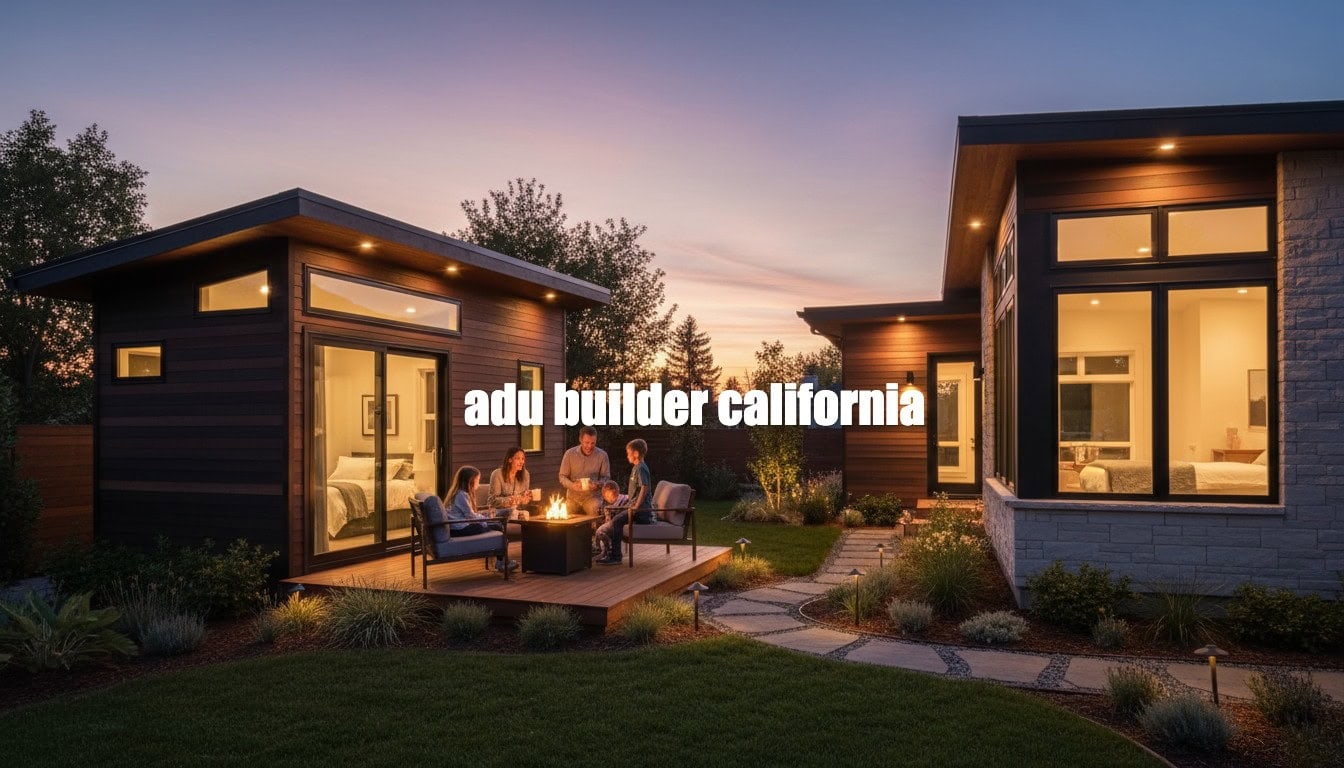
When we consider the California housing crisis, with median home prices exceeding $800,000 statewide, we see why accessory dwelling units (ADUs) have become a game-changing solution for homeowners. We’ve witnessed a remarkable transformation since California streamlined ADU regulations in 2017 – what was once a complex, bureaucratic nightmare has evolved into an accessible path for creating additional housing and generating rental income.
The stakes couldn’t be higher when we’re talking about ADU projects. We’re looking at investments ranging from $150,000 to $400,000 or more, representing one of the largest financial commitments most families will make after purchasing their primary residence. We’ve seen too many California homeowners fall victim to inexperienced contractors who promise the world but deliver subpar results, cost overruns, and endless delays.
What separates a top-tier ADU builder from an average general contractor? We’ve found it comes down to three critical factors: specialized ADU expertise, deep knowledge of California’s evolving regulations, and a proven track record of navigating the complex permitting landscape across different jurisdictions.
In our comprehensive guide, we’ll walk you through everything we’ve learned about selecting the right ADU builder in California. We’ll share the insider knowledge we’ve gathered about costs, timelines, regulatory requirements, and the critical questions you must ask before signing any contract.
As we explore ADU options, we recognize that many California families are also considering alternative housing solutions like granny pods and tiny houses for sale in California. These compact, efficient living spaces offer compelling advantages over traditional ADUs, particularly for families seeking cost-effective solutions for aging parents or multi-generational living arrangements. While a traditional ADU might cost $200,000-$400,000, granny pods can provide similar functionality at a fraction of the cost – often 40-60% less than assisted living facilities that can run $4,000-$8,000 monthly.
Ready to explore your options? Book a call with our experts who have helped hundreds of customers make their tiny home dreams a reality.
Custom vs. Prefab ADU Builders: Which Is Right for Your Project?
When we evaluate ADU building options in California, we encounter a fundamental decision that will shape our entire project: choosing between custom builders and prefab specialists. This choice affects everything from our budget and timeline to the final design and long-term satisfaction with our ADU.
We’ve analyzed the leading custom ADU builders in California, including Nestadu, CALI ADU, Golden State ADUs, and Nonna Homes. These companies specialize in creating unique, site-specific designs that maximize our property’s potential. Custom builders typically charge $250-$500 per square foot, with total project costs ranging from $200,000 to $500,000 depending on size, finishes, and location complexity.
On the prefab side, we see companies like Abodu, ADU Crew, and Backyard Bungalows offering streamlined, factory-built solutions. These specialists provide turnkey ADU packages ranging from $185,000 to $350,000, with standardized designs that can be customized within specific parameters. We’ve found that prefab ADUs typically cost $200-$350 per square foot when we factor in site preparation, permits, and installation.
The timeline differences are significant in our experience. Custom ADU projects typically require 12-18 months from initial design to occupancy, while prefab solutions can be completed in 6-9 months. We attribute this difference to the streamlined design process and factory construction that eliminates weather delays and reduces on-site construction time.
Our decision framework considers several key factors:
- Budget Priority: If we’re cost-conscious and want predictable pricing, prefab solutions typically offer better value
- Timeline Urgency: When we need faster occupancy for rental income or family needs, prefab delivers quicker results
- Site Constraints: Complex lots with setback challenges, slopes, or utility complications often require custom solutions
- Design Vision: If we have specific architectural requirements or want to match our main house perfectly, custom builders provide necessary flexibility
Based on our research, we recommend custom builders for homeowners with budgets exceeding $300,000, complex sites, or specific design requirements. Prefab solutions work best when we prioritize speed, cost control, and straightforward installations on standard lots.
How to Choose an ADU Builder: Essential Selection Criteria
We’ve developed a comprehensive framework for evaluating ADU builders that protects homeowners from the costly mistakes we’ve witnessed throughout California. Our systematic approach focuses on verifiable credentials, proven experience, and transparent business practices.
First, we verify licensing and insurance requirements. Every ADU builder in California must hold a valid contractor’s license – either Class A (general engineering) or Class B (general building). We check license status through the California Contractors State License Board website and confirm the license is current, in good standing, and covers the scope of our project. We also require proof of general liability insurance (minimum $1 million) and workers’ compensation coverage.
ADU-specific experience separates specialists from general contractors. We ask potential builders to document their ADU portfolio, including the number of ADUs completed, years specializing in ADU construction, and experience with our specific ADU type. We’ve found that builders with fewer than 10 completed ADUs often lack the expertise to navigate California’s complex regulatory environment efficiently.
Our portfolio review process examines recent projects similar to our planned ADU. We request photos of completed projects, client references, and permission to visit finished ADUs when possible. We pay particular attention to finish quality, design execution, and how well the ADU integrates with the existing property.
Reference checking reveals crucial insights about builder performance. We contact at least three recent clients and ask specific questions:
- Did the project finish on time and within budget?
- How did the builder handle unexpected challenges or changes?
- Was communication consistent throughout the project?
- Would you hire this builder again?
- Were there any issues after project completion?
We’ve identified critical red flags that signal problematic builders:
- Requesting more than 10% down payment before work begins
- Providing vague timelines or refusing to commit to completion dates
- Lacking a substantial ADU portfolio or recent references
- Pressuring us to sign contracts immediately
- Unable to provide proof of licensing and insurance
- Significantly lower bids than other qualified contractors
The ADU Building Process in California: What to Expect
We’ve guided hundreds of homeowners through California’s ADU building process, and we understand that setting realistic expectations prevents frustration and costly surprises. Our comprehensive timeline breaks down each phase with typical durations and potential challenges.
Phase 1: Feasibility and Site Assessment (1-2 weeks)
We begin every ADU project with a thorough feasibility study. Our builders evaluate site conditions including setback requirements, utility access, soil conditions, drainage patterns, and existing structures. We assess zoning compliance, HOA restrictions, and any potential obstacles like protected trees or easements.
Phase 2: Design and Planning (4-8 weeks)
Our design phase transforms our vision into detailed construction documents. We work with architects and designers to create floor plans, elevations, and specifications that meet our needs while complying with local building codes. Custom designs typically require 6-8 weeks, while prefab modifications can be completed in 4-6 weeks.
Phase 3: Permitting (2-6 months)
California’s streamlined ADU approval process requires ministerial approval within 60 days for compliant projects. However, we’ve found that actual timelines vary significantly by jurisdiction. Simple projects in ADU-friendly cities like San Jose or Sacramento often receive approval in 60-90 days, while complex projects in conservative jurisdictions can take 4-6 months.
Phase 4: Construction (4-8 months)
Our construction phase follows a systematic sequence: site preparation, foundation work, framing, roofing, utilities (electrical, plumbing, HVAC), insulation, drywall, flooring, and finish work. Weather, material availability, and inspection schedules affect our timeline.
Phase 5: Final Inspection and Occupancy (2-4 weeks)
Our final phase includes comprehensive inspections by building officials, utility companies, and fire departments. We verify that all work meets approved plans and building codes. Any deficiencies must be corrected before we receive our certificate of occupancy.
Total timeline expectations vary by project complexity and builder efficiency. Custom ADUs typically require 10-18 months from initial consultation to occupancy, while prefab ADUs can be completed in 6-12 months.
ADU Building Costs in California: Complete Budget Breakdown
We’ve analyzed hundreds of California ADU projects to provide transparent cost information that helps homeowners budget accurately and avoid financial surprises. Our comprehensive breakdown reflects current 2025 market conditions and regional variations across the state.
Regional Cost Variations
We see significant cost differences across California regions. In Southern California, including Los Angeles, Orange County, and San Diego, we typically see ADU costs ranging from $200,000 to $400,000 for standard projects. The Bay Area commands premium pricing, with costs ranging from $250,000 to $500,000 due to higher labor costs, strict building codes, and expensive permits.
Sacramento and Central Valley markets offer more affordable options, with typical costs ranging from $150,000 to $300,000.
Cost Breakdown by Component
Our detailed analysis shows how ADU budgets typically allocate across major categories:
- Design and Architecture (5-10%): $7,500-$25,000 for architectural plans, structural engineering, and design services
- Permitting and Fees (2-5%): $3,000-$15,000 for building permits, plan check fees, and impact fees
- Site Preparation (5-15%): $7,500-$45,000 for excavation, utilities, and site access
- Construction (60-70%): $90,000-$280,000 for materials, labor, and contractor overhead
- Utilities (5-10%): $7,500-$30,000 for electrical, plumbing, and HVAC connections
- Landscaping and Finishing (5-10%): $7,500-$30,000 for exterior work and final details
Cost Per Square Foot by ADU Type
We track costs per square foot to help homeowners compare options:
- Detached New Construction: $250-$500 per square foot, depending on finishes and complexity
- Garage Conversion: $150-$300 per square foot, leveraging existing structure and utilities
- Prefab Installation: $200-$350 per square foot, including site preparation and installation
- Attached ADU Addition: $200-$400 per square foot, sharing utilities with main house
Hidden Costs Often Missed
We’ve identified common expenses that catch homeowners off-guard:
- Utility Connection Fees: $5,000-$25,000 for new electrical, water, and sewer connections
- Impact Fees: $2,000-$15,000 charged by municipalities for infrastructure impact
- Soil Testing and Reports: $1,500-$5,000 for geotechnical analysis required in many areas
- Tree Removal and Protection: $2,000-$15,000 for protected tree compliance
- Setback Variances: $3,000-$10,000 for zoning relief when standard setbacks can’t be met
Financing Options and Current Rates
We help homeowners understand financing alternatives for ADU projects:
- Home Equity Loans: Fixed rates 7.5-9.5%, terms up to 30 years, predictable payments
- HELOCs: Variable rates 8.0-10.5%, flexible access to funds, interest-only options
- Cash-Out Refinancing: Rates 6.5-8.0%, longer terms, may reset existing mortgage
- Construction Loans: Short-term rates 8.5-11.0%, convert to permanent financing
- Specialized ADU Lenders: RenoFi and similar companies offer renovation-specific products
California ADU Regulations and Permitting: What Builders Must Navigate
We’ve witnessed California’s transformation from one of the most restrictive ADU environments to one of the most permissive, thanks to landmark legislation that streamlined the approval process. Our builders must navigate this complex regulatory landscape while ensuring compliance with both state requirements and local variations.
Statewide Requirements and Standards
We ensure all our ADU projects comply with California’s baseline requirements:
- Size Limits: Up to 1,200 square feet for detached ADUs, 50% of primary dwelling for attached ADUs
- Setback Rules: Minimum 4 feet from side and rear property lines, with exceptions for existing structures
- Parking Requirements: Generally waived, especially near transit or in historic districts
- Owner-Occupancy: No longer required statewide, though some cities maintain local requirements
- Height Limits: 16 feet maximum for detached ADUs, with exceptions for existing structures
Local Jurisdiction Variations
We’ve created a comprehensive database of requirements across California’s major jurisdictions. Los Angeles allows ADUs up to 1,200 square feet with streamlined approval, while San Francisco has additional design review requirements for certain neighborhoods. San Diego requires enhanced fire protection in high-risk areas, and Sacramento offers expedited permitting for pre-approved designs.
Streamlined Ministerial Approval Process
We leverage California’s ministerial approval process that requires jurisdictions to approve compliant ADU applications within 60 days. This process eliminates discretionary review and public hearings for standard ADUs, significantly reducing approval timelines.
However, we’ve learned that \”ministerial\” doesn’t always mean \”fast.\” Jurisdictions can still require plan revisions, additional documentation, or coordination with utility companies that extends the timeline.
ADU Return on Investment: Financial Benefits and Property Value Impact
We’ve analyzed the financial performance of hundreds of California ADU projects to quantify the investment benefits and help homeowners make informed decisions. Our comprehensive ROI analysis considers both immediate property value increases and long-term rental income potential.
Property Value Increase
We consistently see ADUs boost overall property values by 20-35% in California markets. A $300,000 ADU investment on a $800,000 property typically increases total value to $1.1-1.2 million, representing a 37-50% return on the ADU investment through increased property value alone.
Regional variations affect value increases significantly. Bay Area properties see the highest value boosts (30-35%) due to severe housing shortages and high rental demand. Southern California markets typically see 25-30% increases, while Central Valley properties experience 20-25% value improvements.
Rental Income Potential
We monitor rental rates across California markets to provide realistic income projections:
- Bay Area: $2,500-$3,500 monthly for 600-800 square foot ADUs
- Los Angeles: $2,000-$3,200 monthly depending on location and amenities
- San Diego: $1,800-$2,800 monthly for comparable units
- Sacramento: $1,500-$2,200 monthly for similar ADUs
- Central Valley: $1,200-$1,800 monthly for standard units
ROI Timeline and Break-Even Analysis
We calculate realistic payback periods based on actual project performance. Most California ADUs achieve cost recovery through rental income in 10-15 years, depending on initial investment and rental rates.
Our break-even analysis for a typical $250,000 ADU generating $2,400 monthly rent shows:
- Gross annual income: $28,800
- Operating expenses: $4,320 (15% of gross income)
- Net annual income: $24,480
- Simple payback period: 10.2 years
- IRR over 20 years: 12-15% including property appreciation
Alternative Uses Beyond Rental Income
We recognize that ADUs provide value beyond rental income:
- Multi-Generational Living: Housing aging parents saves $4,000-$8,000 monthly compared to assisted living
- Home Office: Dedicated workspace adds productivity and tax benefits
- Guest House: Enhanced property appeal and hosting income potential
- Caregiver Housing: Live-in care at fraction of facility costs
Common ADU Building Mistakes and How to Avoid Them
We’ve witnessed countless California homeowners make costly errors during their ADU projects, often resulting in budget overruns, timeline delays, and subpar results. Our experience helping families navigate these challenges has taught us to identify and prevent the most common pitfalls.
Choosing the Wrong Builder Type
We see homeowners frequently select general contractors instead of ADU specialists, assuming all construction is the same. General contractors often lack experience with California’s complex ADU regulations, leading to permit delays, code violations, and design inefficiencies.
Our recommendation: Always verify that your builder has completed at least 10 ADU projects and can provide references from recent clients. Ask specific questions about their ADU experience and request to see their portfolio of completed projects.
Underestimating Total Costs
We consistently see homeowners budget only for construction costs while ignoring permits, site preparation, utility connections, and finishing work. This oversight leads to financial stress and project compromises when funds run short.
We recommend budgeting 10-15% above the contractor’s estimate for contingencies. Hidden costs like soil testing ($2,000-$5,000), utility connection fees ($5,000-$25,000), and impact fees ($3,000-$15,000) can quickly exhaust contingency funds.
Ignoring Local Regulations and Setback Requirements
We see homeowners assume that California’s statewide ADU laws apply uniformly, not realizing that local jurisdictions can impose additional restrictions. This misunderstanding leads to design revisions, permit delays, and increased costs.
Each California city and county has specific requirements for setbacks, height limits, design standards, and parking. We maintain current knowledge of these variations and design projects to meet local requirements from the start.
Poor Site Planning
We frequently encounter projects that fail to consider utility access, drainage patterns, tree preservation, and construction logistics. These oversights create expensive problems during construction.
Utility access planning prevents costly trenching and connection fees. We evaluate existing electrical, water, and sewer locations to minimize new infrastructure requirements.
Inadequate Contract Terms and Payment Protections
We see homeowners sign contracts without proper protections, leading to disputes, cost overruns, and incomplete projects. Vague contracts and inappropriate payment schedules create risks for both parties.
Our contract review checklist includes detailed scope of work, material specifications, change order procedures, timeline commitments, and payment schedules tied to completion milestones. We never recommend paying more than 10% upfront or final payments before receiving certificates of occupancy.
Financing Your California ADU: Comprehensive Funding Guide
We’ve helped hundreds of California homeowners navigate ADU financing options to fund their projects effectively. Our comprehensive guide covers traditional and specialized financing products, current market rates, and strategic considerations for different situations.
Home Equity Loans and HELOCs
We find that home equity products are the most popular financing choice for ADU projects due to competitive rates and tax advantages. Home equity loans provide fixed-rate financing with predictable monthly payments, while HELOCs offer flexible access to funds during construction.
Current home equity loan rates range from 7.5% to 9.5% for qualified borrowers, with terms up to 30 years. HELOCs currently offer variable rates from 8.0% to 10.5%, with 10-year draw periods and 20-year repayment terms.
Cash-Out Refinancing
We help homeowners evaluate cash-out refinancing when current mortgage rates are competitive with their existing loan. Current cash-out refinance rates range from 6.5% to 8.0% for qualified borrowers, typically allowing cash-out up to 80% of home value.
Construction Loans
We arrange construction loans for homeowners who prefer specialized construction financing with built-in project oversight. Construction loan rates currently range from 8.5% to 11.0%, with terms of 12-18 months during construction.
Specialized ADU Financing Programs
We work with specialized lenders who understand ADU projects and offer tailored financing solutions. RenoFi provides renovation loans based on after-improved value, allowing higher loan amounts than traditional equity products.
CalHFA offers ADU grants and low-interest loans for qualified homeowners, particularly those building ADUs for affordable housing. Local programs in cities like Los Angeles, San Francisco, and San Diego provide additional financing assistance.
Frequently Asked Questions About ADU Builders in California
How long does it take to build an ADU in California?
We typically see ADU construction timelines ranging from 6-18 months depending on the type and complexity. Prefab ADUs can be completed in 6-9 months, while custom detached ADUs require 10-18 months. Garage conversions often finish in 4-8 months since we’re working with existing structures.
How much does an ADU cost in California?
We see ADU costs ranging from $150,000 to $500,000+ depending on region, size, and finishes. Sacramento and Central Valley projects typically cost $150,000-$300,000, Southern California ranges from $200,000-$400,000, and Bay Area projects often cost $250,000-$500,000.
Do I need an ADU specialist or can a general contractor build it?
We strongly recommend ADU specialists for most projects. While general contractors can technically build ADUs, specialists offer significant advantages: deep knowledge of California ADU regulations, established relationships with planning departments, streamlined permitting processes, and proven systems for managing ADU-specific challenges.
What’s the difference between custom and prefab ADU builders?
Custom builders provide unlimited design flexibility, site-specific solutions, and premium materials but require longer timelines (12-18 months) and higher costs ($250-$500/sq ft). Prefab builders offer standardized designs with limited customization, faster completion (6-9 months), and more predictable costs ($200-$350/sq ft).
How do I verify an ADU builder’s credentials?
We recommend checking contractor license status through the California Contractors State License Board website, verifying current general liability and workers’ compensation insurance, reviewing Better Business Bureau ratings, and contacting at least three recent clients for references.
What warranties should ADU builders provide?
We expect minimum one-year workmanship warranties covering defects in construction and installation. Structural warranties should extend for 10 years, covering foundation, framing, and major structural components. Get all warranty terms in writing and understand what’s covered and excluded.
Conclusion: Taking the Next Steps with Your California ADU Project
We’ve covered the essential elements of successful ADU projects in California, from selecting the right builder to understanding costs, regulations, and financing options. Our comprehensive guide provides the foundation you need to move forward confidently with your ADU investment.
Key Takeaways for Success
We emphasize three critical success factors: choosing specialized ADU builders with proven California experience, understanding total project costs including hidden expenses, and navigating the regulatory landscape with expert guidance. These fundamentals separate successful projects from costly failures.
Your 30-Day ADU Action Plan
Week 1: Complete site feasibility assessment, research local jurisdiction requirements, and establish preliminary budget. Contact 5-7 potential builders to request initial consultations.
Week 2: Meet with builders for site visits and preliminary proposals. Verify licenses, insurance, and references for your top 3-4 candidates.
Week 3: Request detailed proposals from your top 3 builders. Compare pricing, timelines, and scope of work. Contact references and verify builder credentials thoroughly.
Week 4: Finalize builder selection, review contracts carefully, and secure financing. Schedule design kickoff meeting and establish project timeline and communication protocols.
Final Decision Checklist
Before signing with any builder, we recommend confirming:
- Valid California contractor’s license and current insurance
- Minimum 10 completed ADU projects with verifiable references
- Detailed written proposal with clear scope and pricing
- Realistic timeline with milestone-based payment schedule
- Comprehensive warranty terms and post-construction support
- Knowledge of local jurisdiction requirements and permitting process
California’s ADU Opportunity
We’re optimistic about California’s ADU environment and the strong ROI potential for well-planned projects. The state’s supportive legislation, streamlined approval processes, and housing shortage create favorable conditions for ADU investments.
Our analysis shows that ADUs provide both immediate property value increases and long-term rental income potential. With proper planning and execution, most California ADU projects achieve positive returns within 10-15 years while providing valuable housing solutions.
We encourage homeowners to trust expertise while verifying everything. Choose builders based on proven ADU experience rather than lowest bids. Plan for contingencies and unexpected costs. Maintain realistic expectations about timelines and complexity.
Most importantly, we recommend starting with free consultations from qualified builders in your area. These initial meetings provide valuable insights into your specific site conditions, regulatory requirements, and project feasibility without financial commitment.